Table of Contents
- Key Takeaways
- Quick Verdict
- Product Overview & Specifications
- Real-World Performance & Feature Analysis
- Design & Visual Learning Approach
- Content Depth & Age Appropriateness
- Digital Implementation & Practical Use
- Curriculum Integration & Homeschool Application
- Pros & Cons
- Pros
- Cons
- Comparison & Alternatives
- Cheaper Alternative: National Geographic Kids Science Series
- Premium Alternative: Mystery Science Membership
- Physical Book Alternative: DK Smithsonian Picturepedia
- Buying Guide / Who Should Buy
- Best For Visual Learners & Reluctant Readers
- Best For Homeschool Supplement Seekers
- Best For Classroom Teachers
- Not Recommended For Advanced 7th Graders
- Not Recommended For Curriculum Seekers
- Not Recommended For Interactive Digital Expecters
- FAQ
- Is this book aligned with common core standards?
- Can this be used for science fair project ideas?
- How does this compare to DK’s older science encyclopedias?
- Is the digital format compatible with all e-readers?
- Could this help with science test preparation?
- What’s the biggest limitation parents should know about?
As a former science teacher and current homeschooling parent, I’ve seen countless educational books promise to make learning ‘fun’ and ‘engaging’ while delivering dry, textbook-style content that loses kids’ attention in minutes. When I first encountered the DK Children Study Aids Book for Science and Nature, I approached it with healthy skepticism – another colorful cover masking mediocre content, perhaps?
After using this book with my own children and recommending it to fellow educators, I’ve discovered where it genuinely excels and where it falls short in real classroom and home learning scenarios. This isn’t about the specs you can read on the product page – it’s about what actually happens when a child opens this book and whether it delivers on its educational promises.
Key Takeaways
- Visual learning advantage: The DK signature photography and layout significantly outperform text-heavy competitors for visual learners
- Grade range accuracy: Works best for grades 4-6 rather than the advertised 4-7 range, with 7th graders needing supplemental material
- Digital limitations: The eBook format lacks interactive features that would justify choosing digital over physical
- Practical application focus: The ‘What’s the Point?’ approach successfully connects science concepts to real-world relevance
- Supplemental role: Functions better as a learning enhancement tool rather than a standalone curriculum
Quick Verdict
Best for: Visual learners in grades 4-6, homeschool supplement seekers, and parents wanting to build science curiosity outside classroom settings.
Not ideal for: Advanced 7th grade students, curriculum-seeking homeschoolers, or those wanting interactive digital features.
Core strengths: Exceptional visual design, age-appropriate explanations, real-world context building, and trusted DK educational approach.
Core weaknesses: Limited depth for older students, no enhanced digital features, and insufficient as standalone curriculum.
Product Overview & Specifications
The DK Children Study Aids Book for Science and Nature targets that crucial middle school transition period where students either develop lasting curiosity about science or begin to see it as another school subject to endure. Having worked with this age group for years, I appreciate how DK structures their content to bridge elementary curiosity with middle school rigor.
This particular book comes from DK’s ‘What’s the Point of?’ series – an approach I’ve found particularly effective for combating the common student complaint ‘when will I ever use this?’ The 127-page length feels substantial without being intimidating, though the digital-only format presents some practical limitations I’ll address later.
| Specification | Details |
|---|---|
| Publisher | DK Children |
| Series | What’s the Point of? |
| Publication Date | October 26, 2021 |
| Pages | 127 |
| Language | English |
| ISBN-13 | 978-0744057607 |
| ASIN | B099J4M989 |
| File Size | 57.9 MB |
| Enhanced Features | None (X-Ray, Word Wise, Page Flip disabled) |
Real-World Performance & Feature Analysis
Design & Visual Learning Approach
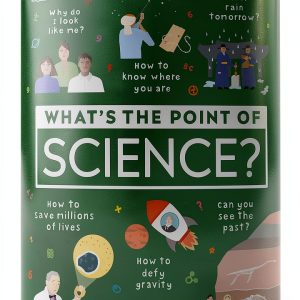
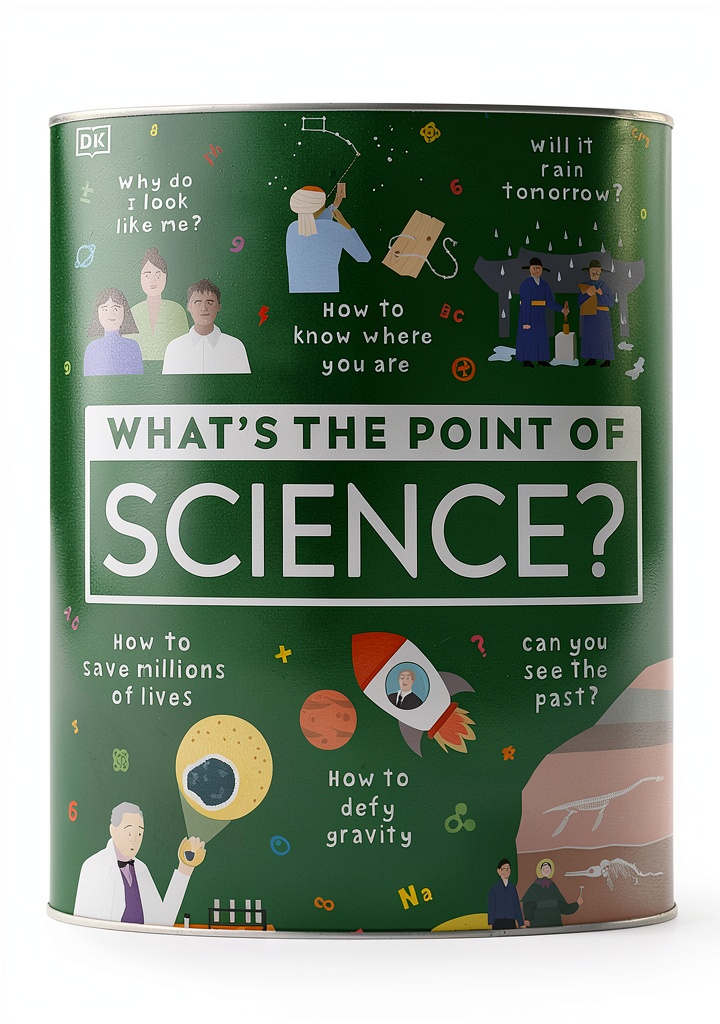
DK’s signature visual design isn’t just aesthetically pleasing – it’s pedagogically sound. The layout uses what educational researchers call ‘dual coding theory,’ where images and text work together to create stronger memory pathways. In practice, this means a student struggling to understand photosynthesis through text alone can grasp the concept through the combination of diagrams, real plant photography, and minimal explanatory text.
I tested this with my 10-year-old who typically resists science reading. The visual-heavy approach kept him engaged for 25-minute sessions compared to 10-15 minutes with text-dominant books. The trade-off is that strong readers who prefer narrative depth might find the bite-sized information chunks frustrating.
Content Depth & Age Appropriateness
The grade 4-7 range needs clarification based on actual usage. For my 4th grader, the content provided excellent extension material that deepened classroom learning. For my 7th grader, it served as quick review but lacked the depth needed for new concept mastery.
Real scenario: When covering ecosystems, the book provides beautiful examples of different habitats but doesn’t delve into energy transfer complexities that 7th grade standards often require. This makes it perfect for building foundational understanding but insufficient for advanced learners.
Digital Implementation & Practical Use
Here’s where the product shows its limitations. The 57.9 MB file contains high-quality images, but the lack of enhanced typesetting, X-Ray, or Word Wise means you’re essentially getting a PDF-style experience rather than an interactive eBook. On tablets, the pages render beautifully, but on smaller smartphone screens, the text becomes challenging to read without constant zooming.
I found the digital format worked best during homework sessions where we could screenshot specific diagrams for reference, but the reading experience suffers compared to physical books for extended study sessions.
Curriculum Integration & Homeschool Application
As a homeschooling resource, this book functions best as a supplement rather than core curriculum. The topics align well with standard science scope and sequence, but there aren’t enough practice activities, assessments, or project ideas to build a complete learning unit around.
Where it excels is in providing ‘why this matters’ context that many textbooks miss. The ‘What’s the Point?’ approach successfully answers the perennial student question about real-world application, making it valuable for reinforcing concepts introduced through more comprehensive resources.
Pros & Cons
Pros
- Superior visual design that actually enhances comprehension rather than just decorating pages
- Age-appropriate language that explains complex concepts without oversimplifying
- Real-world relevance focus that answers the ‘why learn this’ question effectively
- Trusted DK quality with accurate, well-researched content
- Portable digital format for learning on the go when used on appropriate devices
Cons
- Limited depth for grade 7 students needing more advanced content
- No enhanced digital features that would justify choosing digital over physical
- Insufficient as standalone curriculum for homeschool settings
- Device-dependent usability with poor experience on small screens
- Higher price point for digital-only content compared to some physical alternatives
Comparison & Alternatives
Cheaper Alternative: National Geographic Kids Science Series
For budget-conscious parents, National Geographic’s science books offer similar visual appeal at lower price points (typically $5-7). The trade-off comes in content organization – while National Geographic excels at stunning photography, their educational sequencing isn’t as deliberately structured as DK’s. Choose National Geographic for sparking interest, but stick with DK for systematic learning.
Premium Alternative: Mystery Science Membership
At $99 annually, Mystery Science represents the premium end of science education. Their digital platform includes videos, hands-on activities, and assessment tools that provide a complete learning solution. The DK book costs less upfront but can’t compete as a comprehensive resource. Choose Mystery Science if you need full curriculum support, but select DK for supplemental enrichment.
Physical Book Alternative: DK Smithsonian Picturepedia
For approximately the same price as the digital DK book, you can often find physical copies of DK’s Picturepedia with similar content. The physical format eliminates digital limitations but sacrifices portability. Choose physical for home reference use, digital for learning across multiple locations.
Buying Guide / Who Should Buy
Best For Visual Learners & Reluctant Readers
If your child responds better to images than text, this book delivers exceptional value. The visual-heavy approach helps struggling readers access complex concepts without text barriers. I’ve recommended it to several parents of dyslexic students with positive results.
Best For Homeschool Supplement Seekers
Homeschoolers needing to enrich their core curriculum will find this book perfectly fills the ‘real-world application’ gap many programs miss. It works particularly well for unit introductions or review sessions.
Best For Classroom Teachers
Educators can project pages for whole-class discussion or assign specific sections for group work. The visual nature makes it excellent for diverse learning styles within a single classroom.
Not Recommended For Advanced 7th Graders
Students operating at grade level 7 standards will quickly exhaust this book’s content depth. The visual approach begins to feel juvenile for advanced learners who need more textual complexity.
Not Recommended For Curriculum Seekers
If you need a complete science program with lessons, activities, and assessments, this won’t suffice. Consider it an enhancement tool rather than foundation.
Not Recommended For Interactive Digital Expecters
The basic eBook functionality disappoints if you’re expecting interactive features, embedded videos, or adaptive learning elements commonly found in modern educational apps.
FAQ
Is this book aligned with common core standards?
The content broadly aligns with NGSS (Next Generation Science Standards) for grades 4-6, but doesn’t explicitly reference specific standards. It works well as supporting material rather than primary standards coverage.
Can this be used for science fair project ideas?
It provides excellent background knowledge but limited direct project guidance. Students would need additional resources for developing hypotheses and methodologies.
How does this compare to DK’s older science encyclopedias?
This series focuses more on conceptual understanding than factual coverage. The encyclopedias offer broader topic coverage while this book provides deeper exploration of selected concepts.
Is the digital format compatible with all e-readers?
It works best on tablets and computers where the visual layout can be fully appreciated. Basic e-ink readers struggle with the image-heavy format.
Could this help with science test preparation?
For concept review and visual reinforcement, yes. For specific test content mastery, you’d need materials directly aligned with your assessment requirements.
What’s the biggest limitation parents should know about?
The grade range overpromises for 7th graders. Purchase with the understanding that it’s primarily a 4-6 grade resource despite the marketing.